
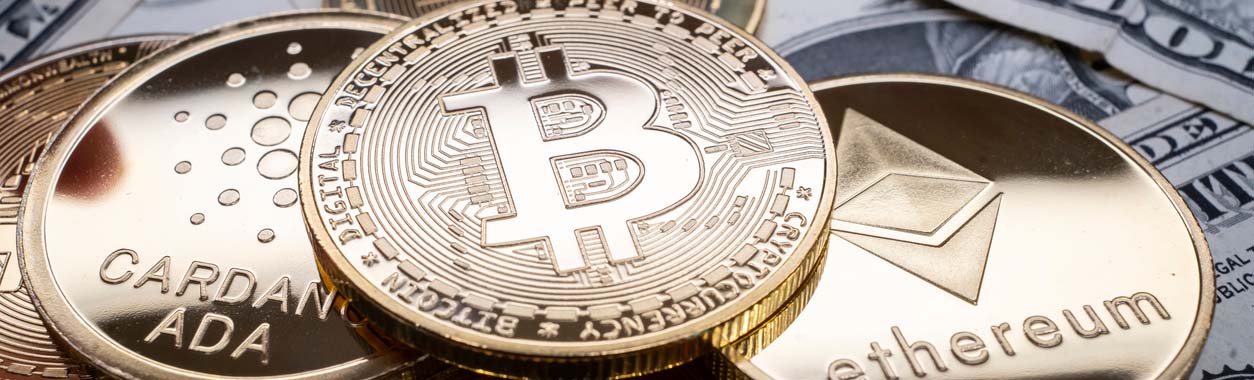
Last year the UK government introduced the Property (Digital Assets etc) Bill into the House of Lords, where it has passed second reading and on 3 February was amended by a special public bill committee. This Bill was recommended by the Law Commission of England and Wales to help clarify the law relating to property rights in digital assets such as cryptoassets.
STEP welcomes the Bill as a clarification of the law in England and Wales. However, at first glance the impact of the change is not obvious. This blog therefore considers why the Bill was introduced, what it does, and what it does not do.
The Bill
The Property (Digital Assets etc) Bill has two sections. The first section reads:
‘Objects of personal property rights
A thing (including a thing that is digital or electronic in nature) is not prevented from being the object of personal property rights merely because it is neither—
a) a thing in possession, nor
b) a thing in action.’
The second section confines the change to the law of England and Wales, as well as (thanks to the recent amendment) Northern Ireland.
The purpose of the change
The need for the Bill originates in a theory of English personal property law that was famously stated by Fry LJ in the 1885 case of Colonial Bank v Whinney: ‘All personal things are either in possession or action.’ On the basis of this understanding of the law, there is no room for the law to recognise personal property rights in things unless they are tangible things that can be possessed (things in possession) or legal rights that can be enforced by a claim against another person (things in action – for example, a debt).
This presents a difficulty when it comes to recognising property rights in cryptoassets. They are clearly not a form of tangible property. However, unlike previous forms of intangible assets that have been recognised as subject to property rights, it isn’t possible (at least in the simple case of an exchange token like Bitcoin) to identify any legal right enforceable against another person, and so nor are they a thing in action.
In recent years, the courts of England and Wales have generally been open to the possibility that cryptoassets could be the object of property rights. However, the Law Commission recommended that the government eliminate any remaining confusion by passing legislation in the form of the current Bill.
What it means, and what it does not mean
The Bill is drafted entirely in the negative. It deliberately does not state that any particular thing is in fact a type of personal property; just that a failure to fit into one of the existing two categories is no reason by itself for something to be outside the scope of personal property law.
There will, of course, continue to be other limiting factors to the scope of personal property. The law recognises various criteria for property rights, one of which is that things must be ‘rivalrous’. That is, the use of a thing by one person necessarily prejudices the ability of another person to make equivalent use of it at the same time.
A diamond ring is rivalrous, because if someone is wearing it then no-one else can be wearing it at the same time. Similarly, rivalrousness is key to the design of systems like Bitcoin. Once you have transferred a Bitcoin to another person’s address, no-one is now able to spend that specific value of Bitcoin other than somebody who controls the private key to that address.
However, you cannot own pure information, because it is not rivalrous. When a joke or a fact is shared with someone else, it does not limit one’s ability to further share it with other people.
Therefore, while the Bill removes one reason why things arguably fall outside the scope of personal property, it does not mean that anything and everything will be the object of property rights.
Perhaps misleadingly, the name of the Bill refers to ‘digital assets’, a term which is used to describe anything from cryptoassets to the files on a computer. It is, however, not intended to make all types of digital asset into personal property, as the explanatory notes to the Bill make quite clear. Each variety of digital asset will need to be considered on its own merits.
There is already a body of case law determining that many kinds of cryptoassets meet the necessary criteria to be the object of property rights. However, in the case of other digital assets, the position is much more uncertain. Digital files, for example, are not generally understood to be rivalrous. If someone emails a copy of a digital photo, they may have the photo saved on their computer, and they can still look at it and copy it to other people. While there are some interesting conceptual arguments to the contrary, the conventional view remains that digital files cannot be the objects of property rights, and the Bill will not change that.
Therefore, a will may leave cryptoassets to a chosen beneficiary (although it will not be of any help unless a system is in place for that beneficiary to access the private keys). However, even once the Bill becomes law, a gift in a will of digital files is unlikely for the time being to be legally enforceable. While it is important to consider how you want your digital files to be handled after you are gone, a will is not the solution to this problem.
 The STEP Blog